
Io and Jupiter science
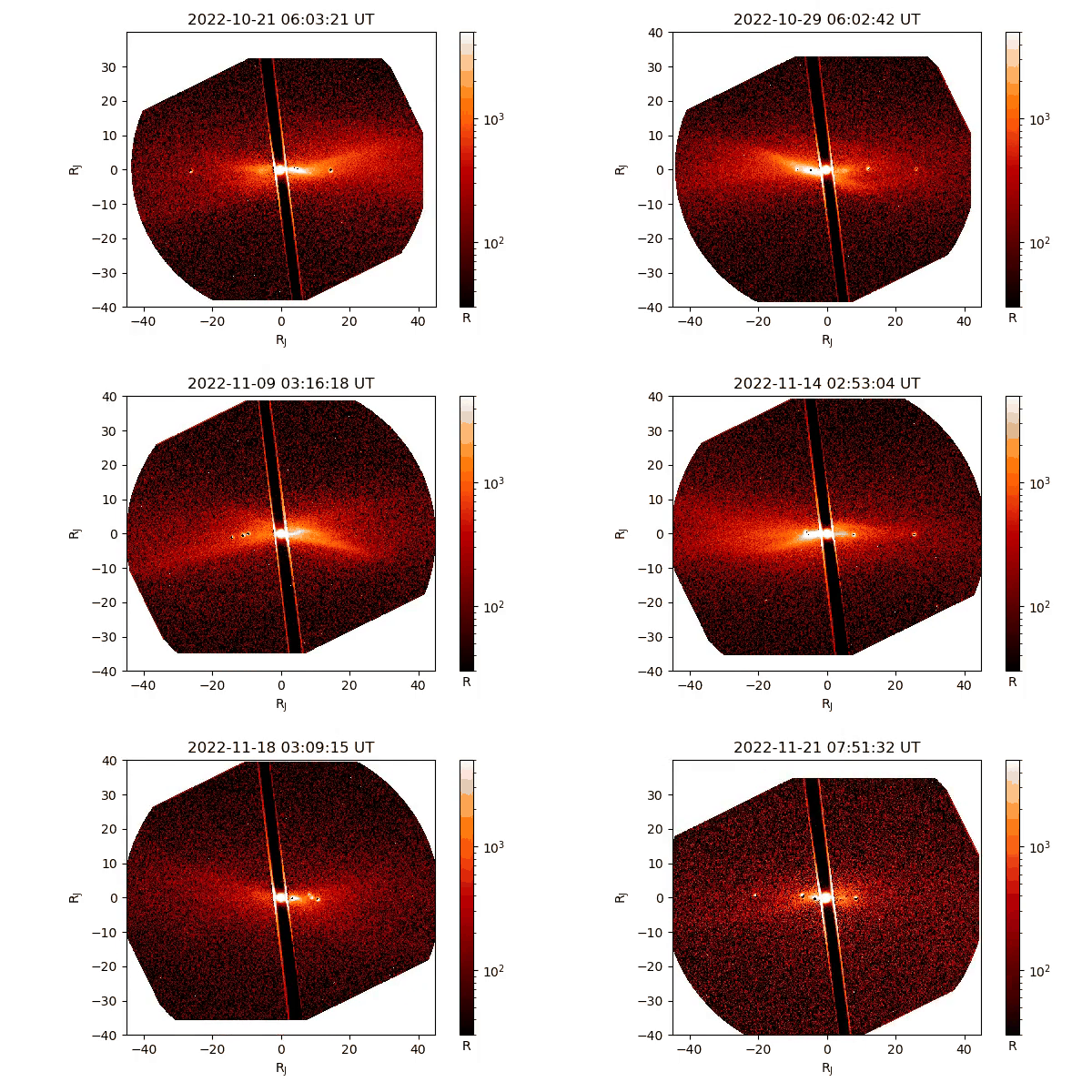
Sodium gas around Jupiter (the Jovian sodium nebula).
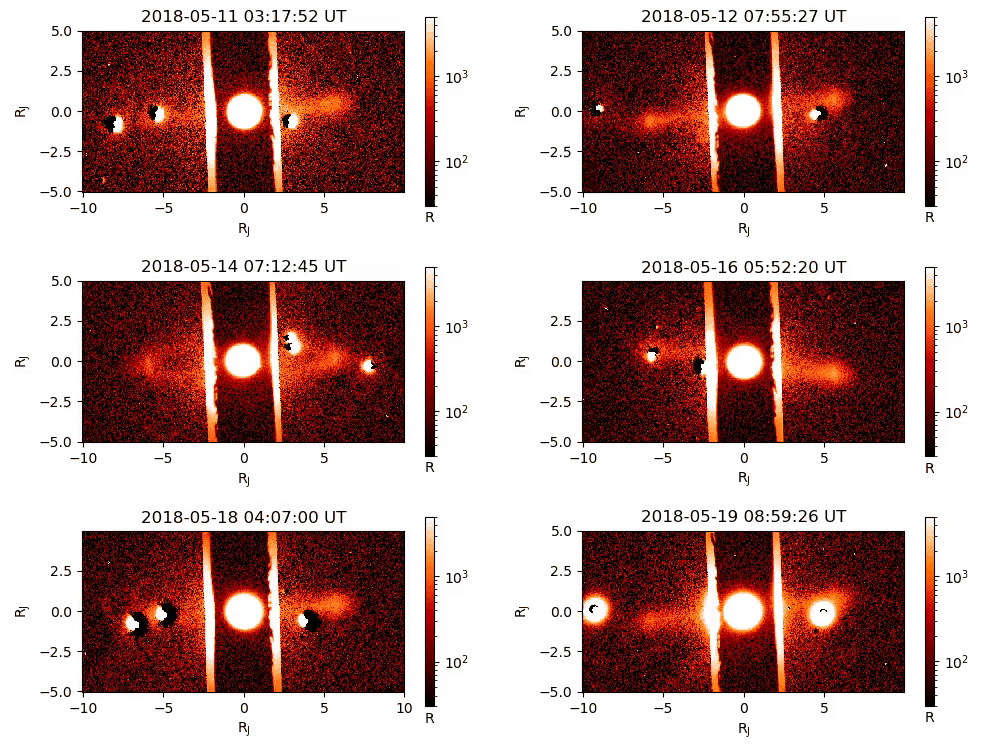
Ionized sulfur trapped in Jupiter’s magnetic field (the Io plasma torus)
By studying gas escaping from Io, IoIO provides insights into processes occurring on Io, in its atmosphere and in Jupiter’s magnetosphere (the space around Jupiter dominated by its magnetic field). The images below show the first steps that have been taken to extract scientific quantities from the data.
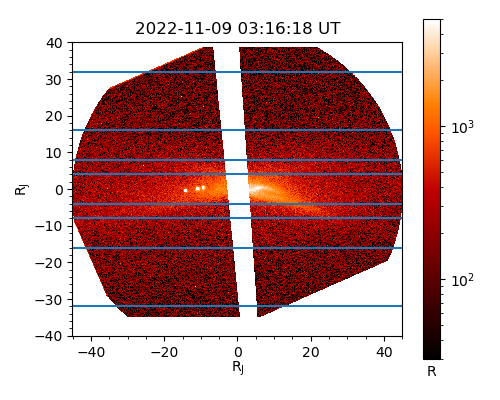
The brightness of the Jovian sodium nebula is currently determined by a very simple method: divide each of the thousands of IoIO images into the boxes shown here and calculate the average brightness within each box. The resulting time history of the brightnesses at three distances from Jupiter are shown in the upper panel of the plot below (Na Neb.)
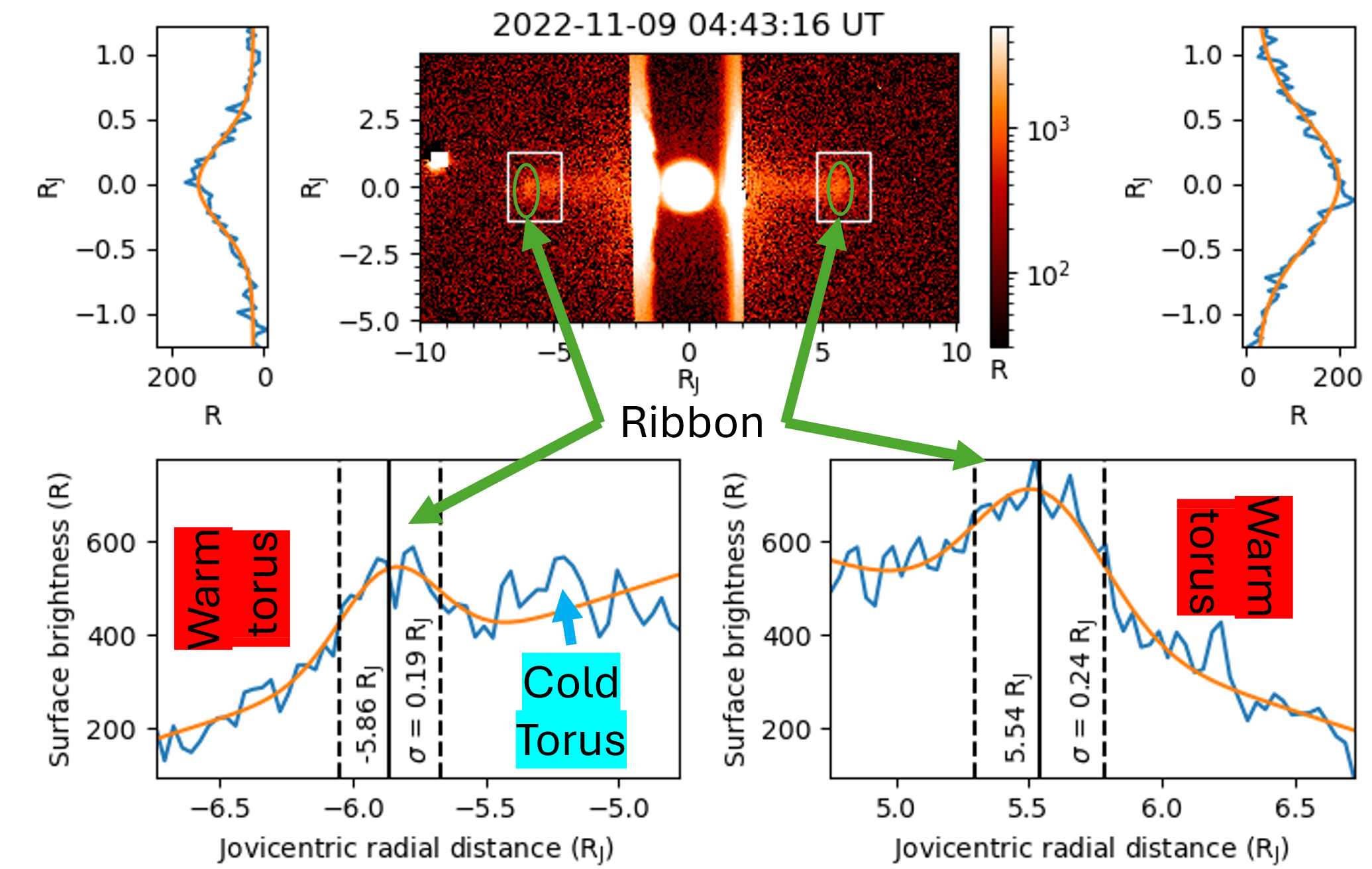
The Io plasma torus is a complicated structure with three main parts. To date, we have concentrated on the ribbon, circled in green in the image and shown as the peak in the graphs below the image. The time history of the ribbon brightness is shown in the lower panel of the plot below (IPT Ribbon Surf. Bright).
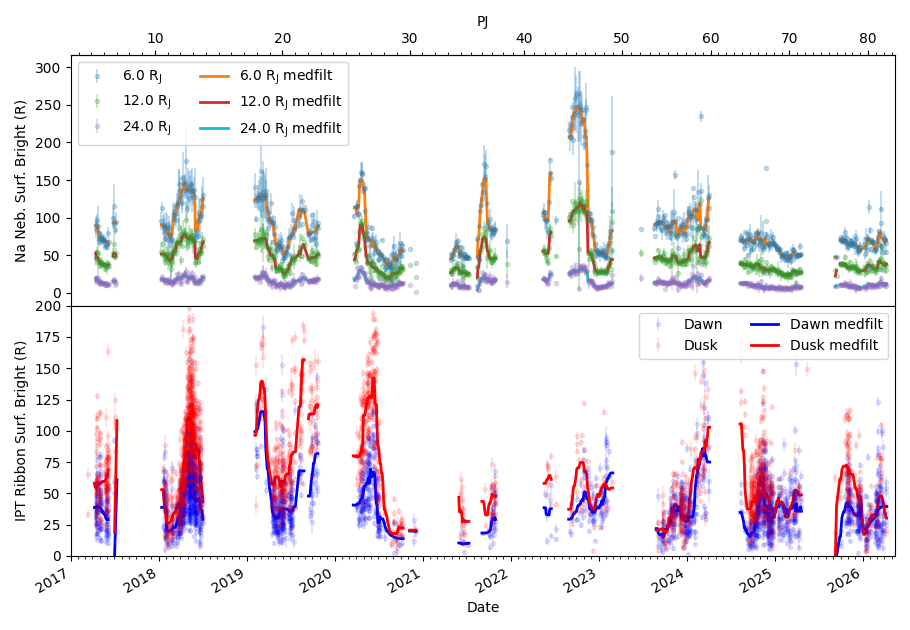
The time history of the Jovian sodium nebula at three distances from Jupiter (upper plot) and Io plasma torus ribbon feature on the dawn (east) and dusk (west) side of Jupiter (lower plot). These data have provided valuable context to the Juno mission, which has been flying through the gases as it orbits Jupiter. Juno’s orbit numbers (perijoves, Pj) are shown on the top axis.
Click here for all of the research papers that have used IoIO data.
Click here for IoIO data recorded to date
Future Io science directions: we would like to process the Jovian sodium nebula and Io plasma torus images in more detail to extract more science information. The structures in the sodium nebula may provide insights about how material is released from Io’s atmosphere and may help narrow-down the location of the geologic events (presumably volcanic eruptions) that produce the gas. Detailed analysis of the time evolution of the warm and cold torus relative to the ribbon can help us understand how material feeds into the torus and the rate at which material diffuses out of the torus into the rest of Jupiter’s magnetosphere. Stay tuned for more results!