What makes IoIO special?
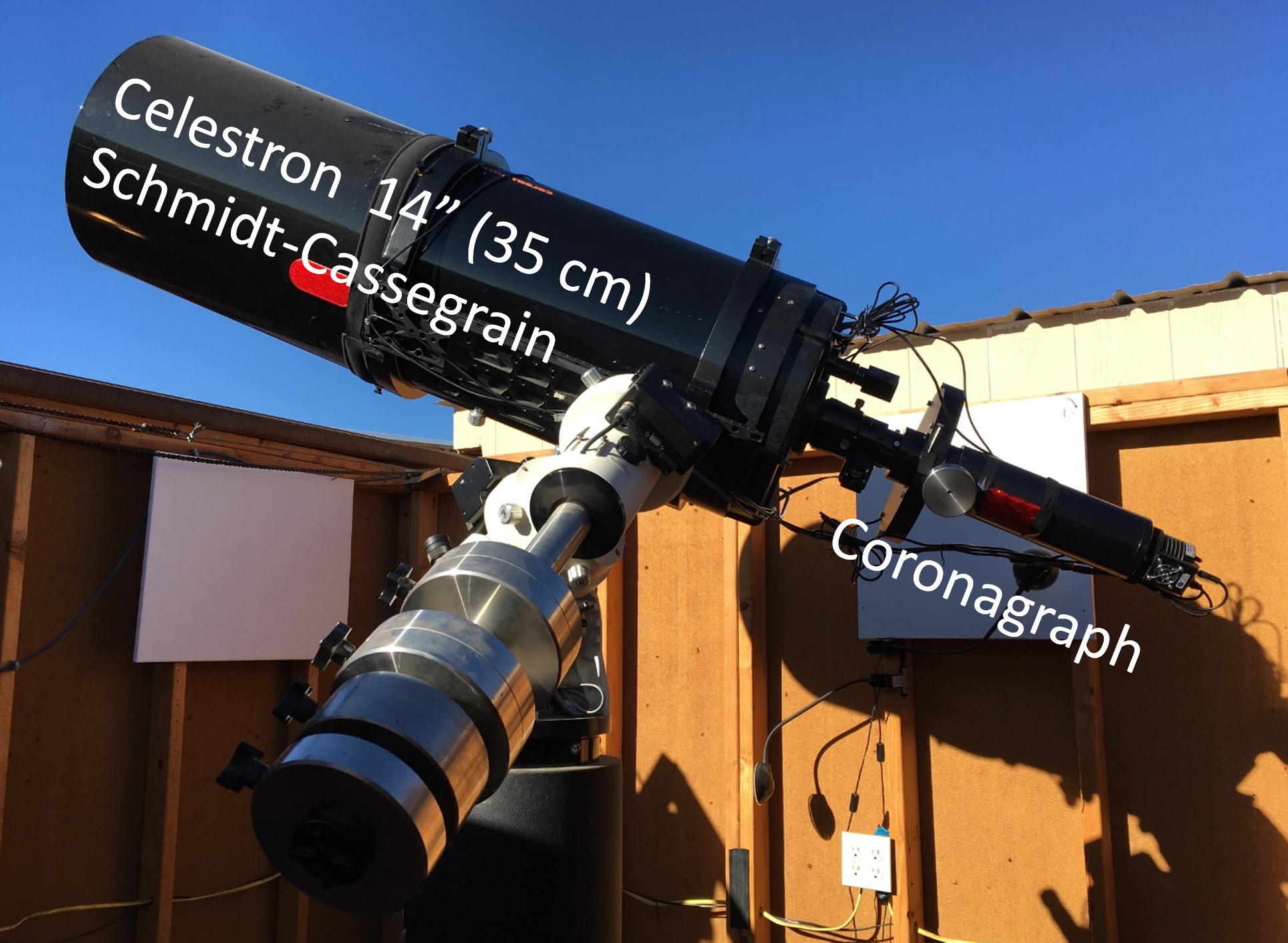
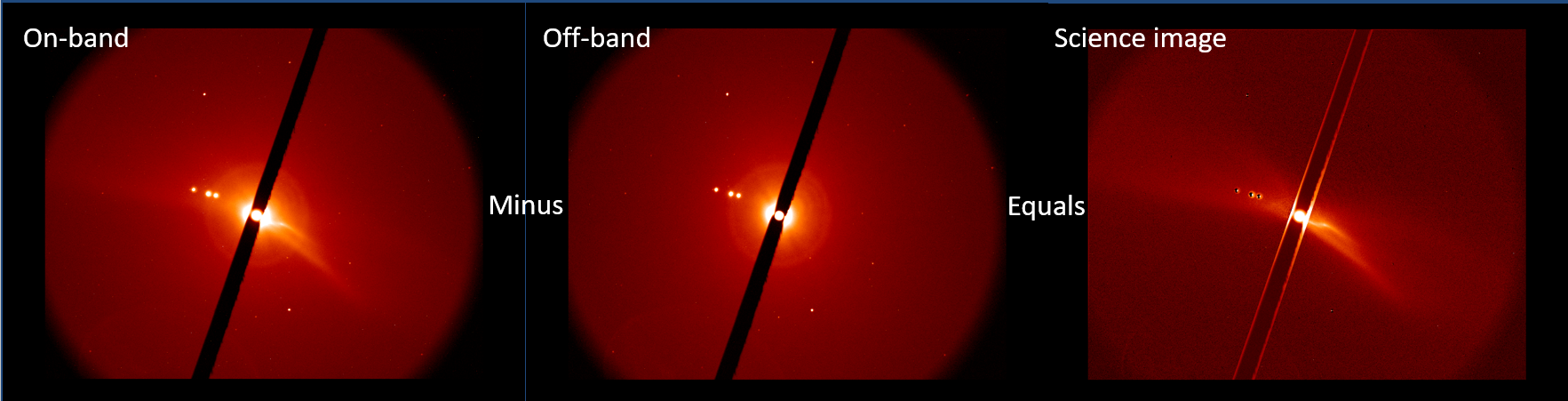
IoIO is not just any telescope. IoIO is a coronagraph. And a special coronagraph at that. IoIO uses a strip of material called a neutral density filter to attenuate light from Jupiter (makes Jupiter dimmer) so that both Jupiter and faint gas surrounding Jupiter can be visible in the same image (see images below — Jupiter is the bright dot in the middle). Having Jupiter in the science image makes it easier to align the telescope to the precision needed to exercise IoIO’s other superpower: the filters it uses to study only certain colors of light (narrow-band filters). The image sequence below shows how it works. Here “on-band” means an image taken through a filter that passes the light we are interested in scientifically (yellow light from sodium atoms, in this case) and “off-band” means a color very nearby that has all of the background effects that the on-band image has but none of the science. By subtracting the off-band image from the on-band, the result is an incredibly clean science image that reveals in detail the amazing structure of the sodium cloud around Jupiter (the Jovian sodium nebula).
IoIO’s final superpower: dedication. Whenever Jupiter is visible, IoIO collects pairs of on-band and off-band images every 15 minutes in both sodium light and ionized sulfur. As detailed in the Science Corner, this comprehensive coverage provides IoIO a view of Io, Jupiter and their surroundings that larger telescopes cannot get because the large telescopes are highly over-subscribed and can only take a few observations of the system per year.
Below are some movies created from small snippets of the IoIO dataset that highlight how this highly dynamic system changes as Jupiter rotates every 10 hours and as Io orbits Jupiter every 42 hours. The big dot in the middle is Jupiter, the small dots are Jupiter’s Galilean moons (Io, Europa, Ganymede and Callisto). The dark “hole” around Jupiter in some of the movie frames is caused by passing clouds not currently recognized by our software. Given sufficient resources, we’d be able to correct for this and other effects so as to get the most out of the data.
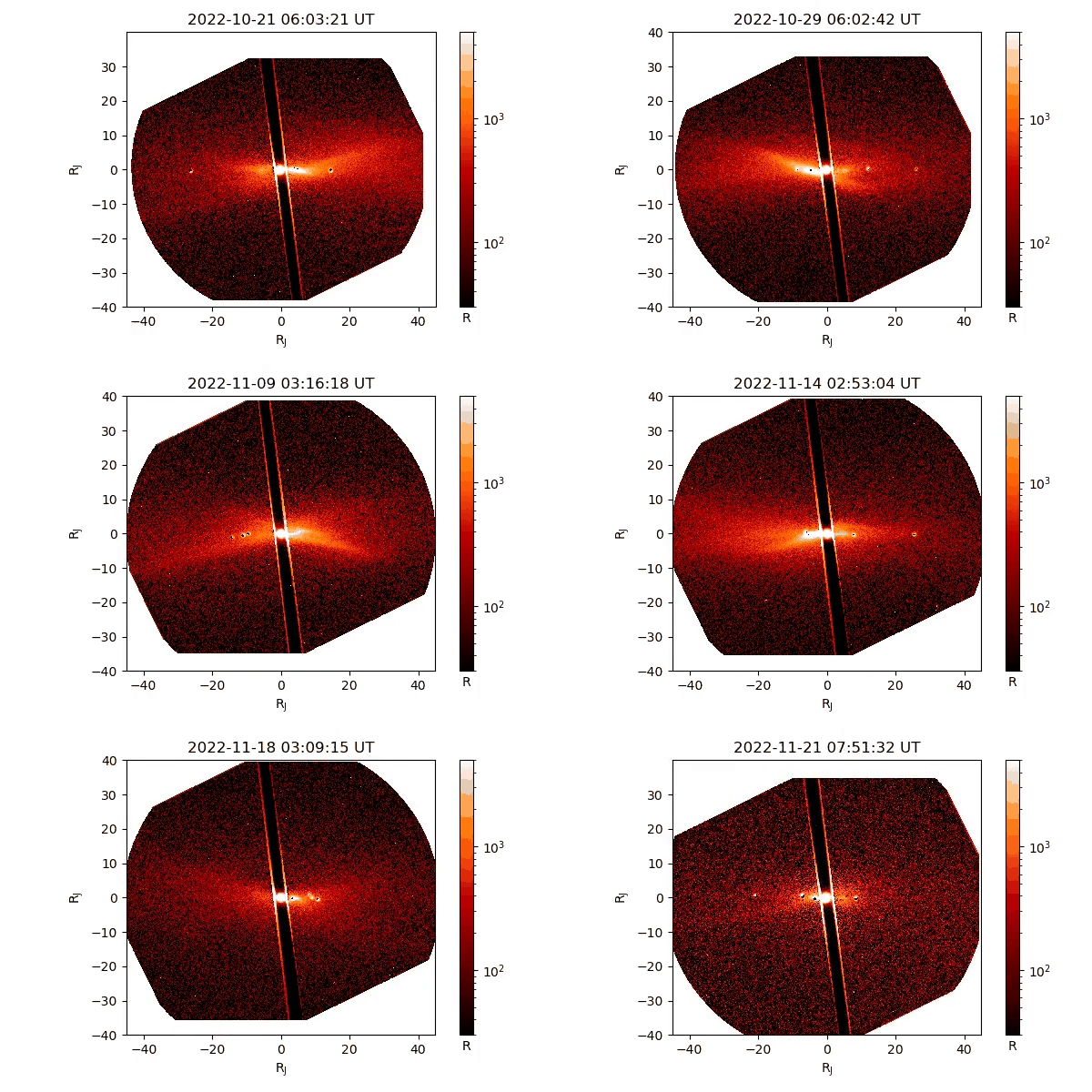
Sodium atoms ejected from Io and the Io plasma torus form a beautiful set of structures collectively known as the Jovian sodium nebula. IoIO has collected the largest set of Jovian sodium nebula images on this size scale. These images may hold clues about how gas travels from Io’s volcanoes, through its atmosphere and into Jupiter’s space environment. As shown in the Science Corner, only a very basic analysis has been done on these data to date.
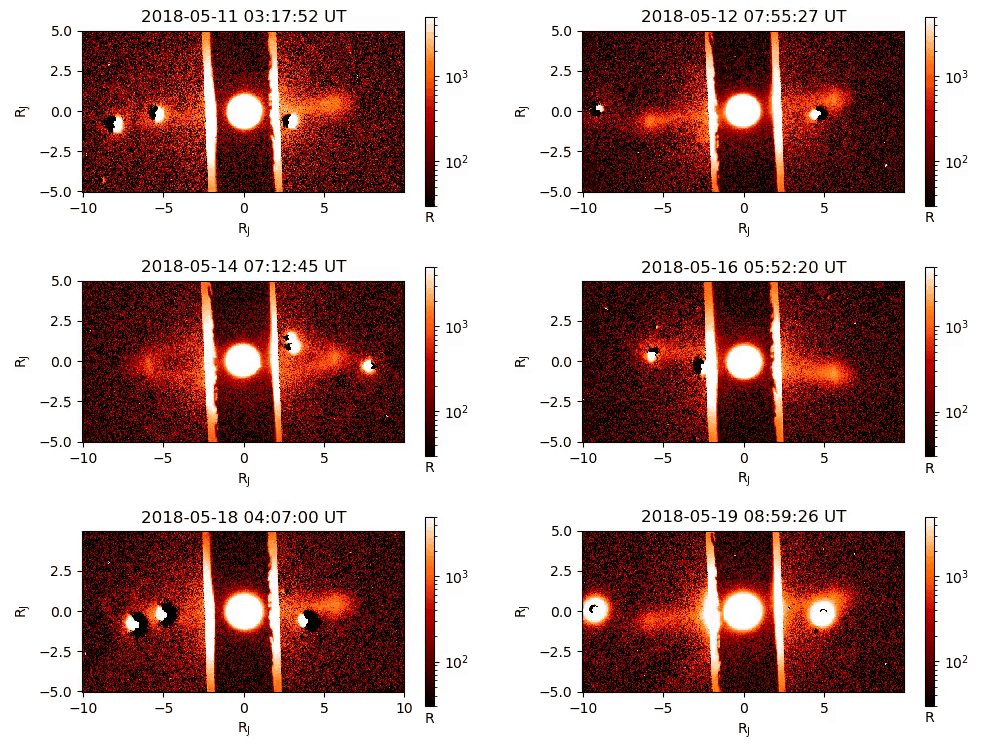
Ionized sulfur atoms from Io are trapped in Jupiter’s magnetic field to form an ethereal hula hoop that surrounds Jupiter known as the Io plasma torus. The Science Corner shows the detailed structure seen in the torus.
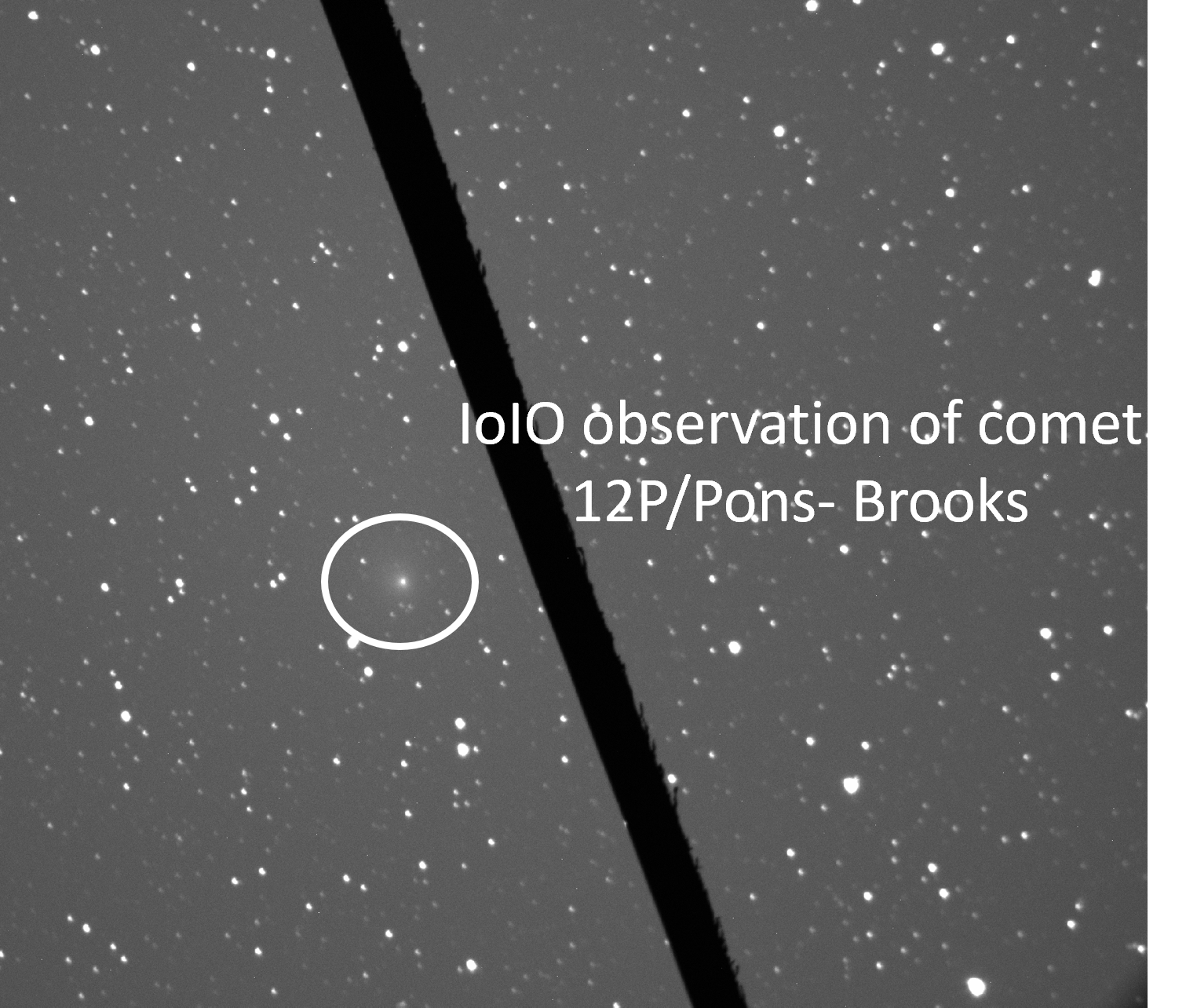
By pointing the telescope slightly off-center, IoIO can record images of any object. This is how it records transits of extra solar planets and nightly observations of comets. This enables IoIO to be PSI’s general use observatory.